Cervical Spinal Stenosis
Narrowing in the neck that may affect nerve roots or the spinal cord.
General educational information is not a diagnosis or treatment recommendation for an individual.
Overview
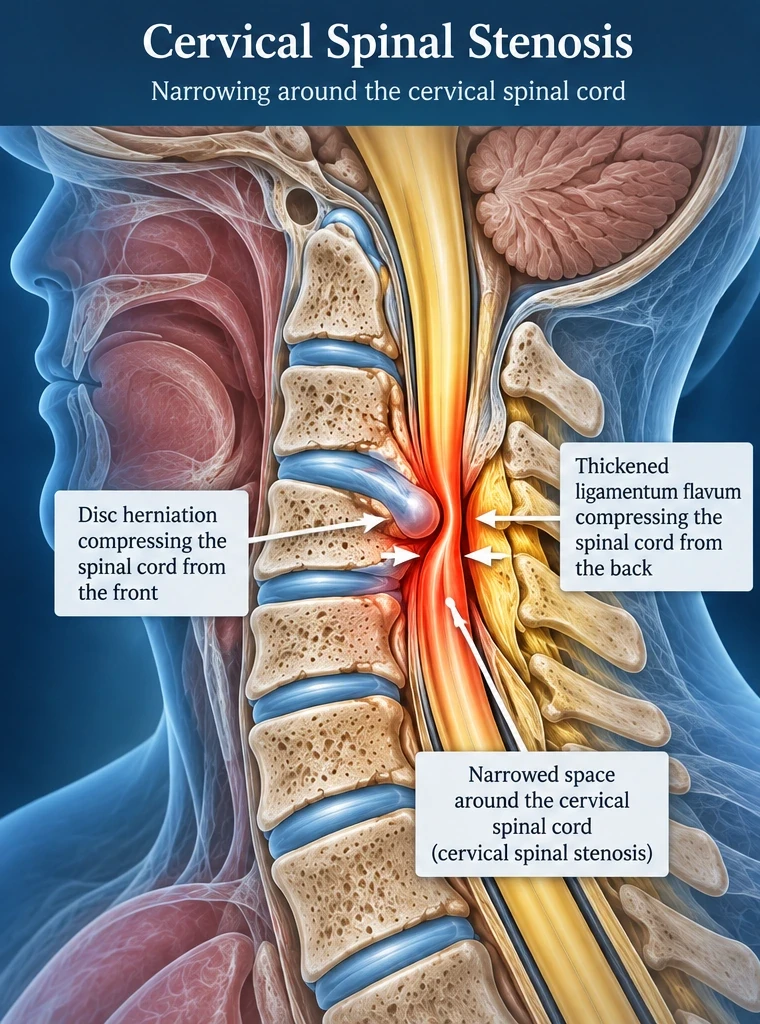
Cervical spinal stenosis means narrowing of spaces in the neck through which the spinal cord or nerve roots travel. Stenosis describes anatomy; it does not by itself establish neurological injury. Some people have narrowing on imaging without symptoms. Treatment decisions depend on the examination, symptoms, and the location and severity of compression.
Common Symptoms
A compressed nerve root can cause pain extending into an arm, tingling, numbness, or weakness. This is called cervical radiculopathy. Compression affecting spinal cord function can produce hand clumsiness, loss of dexterity, unsteady walking, or balance changes. This clinical syndrome is cervical myelopathy, not simply another name for stenosis.
Causes and Risk Factors
Age-related disc changes, enlarged joints, bone spurs, and thickened supporting ligaments can reduce space around neural structures. Disc herniation may also contribute. The importance of these findings varies: common degenerative changes are not automatically the explanation for neck pain.
Evaluation and Diagnosis
Assessment includes how symptoms began, changes in hand function and walking, and an examination of strength, sensation, reflexes, and balance. MRI shows the spinal cord, nerve roots, and surrounding soft tissues. X-rays or CT may help clarify alignment or bone anatomy. The clinician compares imaging with the examination rather than treating the scan alone.
Nonsurgical Treatment Options
For selected patients without significant cord dysfunction, activity adjustments, supervised rehabilitation, and symptom-directed medication may be considered. These approaches can help symptoms but do not enlarge a narrowed canal. Known or suspected myelopathy requires a different discussion from uncomplicated neck pain; ongoing neurological observation may be important.
When Surgery May Be Considered
Surgical evaluation may be appropriate for progressive neurological impairment, clinically important spinal cord compression, or persistent nerve-related symptoms despite appropriate nonsurgical care. Decompression aims to relieve pressure; stabilization may be needed in selected situations. The approach depends on the levels involved, alignment, stability, health, and goals. An incidental finding alone is not an automatic indication for surgery.
When to Seek Neurosurgical Evaluation
Persistent arm weakness, deteriorating hand coordination, or changing gait warrants assessment. Bring prior images and reports and describe practical difficulties, such as buttoning clothing or walking on uneven ground. A consultation can distinguish nerve-root symptoms from cord dysfunction and review whether observation, rehabilitation, or surgery is appropriate.
Important Warning Signs
Sudden or rapidly worsening weakness, new inability to walk, or major neurological deterioration requires emergency medical assessment. New bladder or bowel dysfunction with neurological changes also needs urgent evaluation. Do not wait for a routine office visit when symptoms are rapidly changing.
Questions to Ask Your Neurosurgical Clinician
Is the narrowing affecting a nerve root, the spinal cord, or neither? Do I have clinical signs of myelopathy? Which changes should prompt urgent reassessment? What are the goals and limitations of observation, nonsurgical care, or decompression in my situation?
References and Further Reading
The following professional-society patient-education resources informed this draft. They are not formal clinical practice guidelines and do not endorse this website.
Preparing for Your Consultation
Bring your imaging, reports, medication list, and relevant treatment history. Describe symptoms and the activities that matter most to you. Clinical assessment combines examination and imaging with individualized discussion of options.
Medical Information Disclaimer
This article is an editorial draft requiring physician review. It provides general education, not individualized medical advice or a guarantee of treatment results. Seek qualified medical assessment for your own circumstances and emergency care for urgent symptoms. This independently maintained physician-information website is not an official website of CU Medicine, the University of Colorado, or UCHealth. References do not imply society or institutional endorsement.