Spondylolisthesis
A vertebra shifting relative to an adjacent vertebra; relevance depends on clinical findings.
General educational information is not a diagnosis or treatment recommendation for an individual.
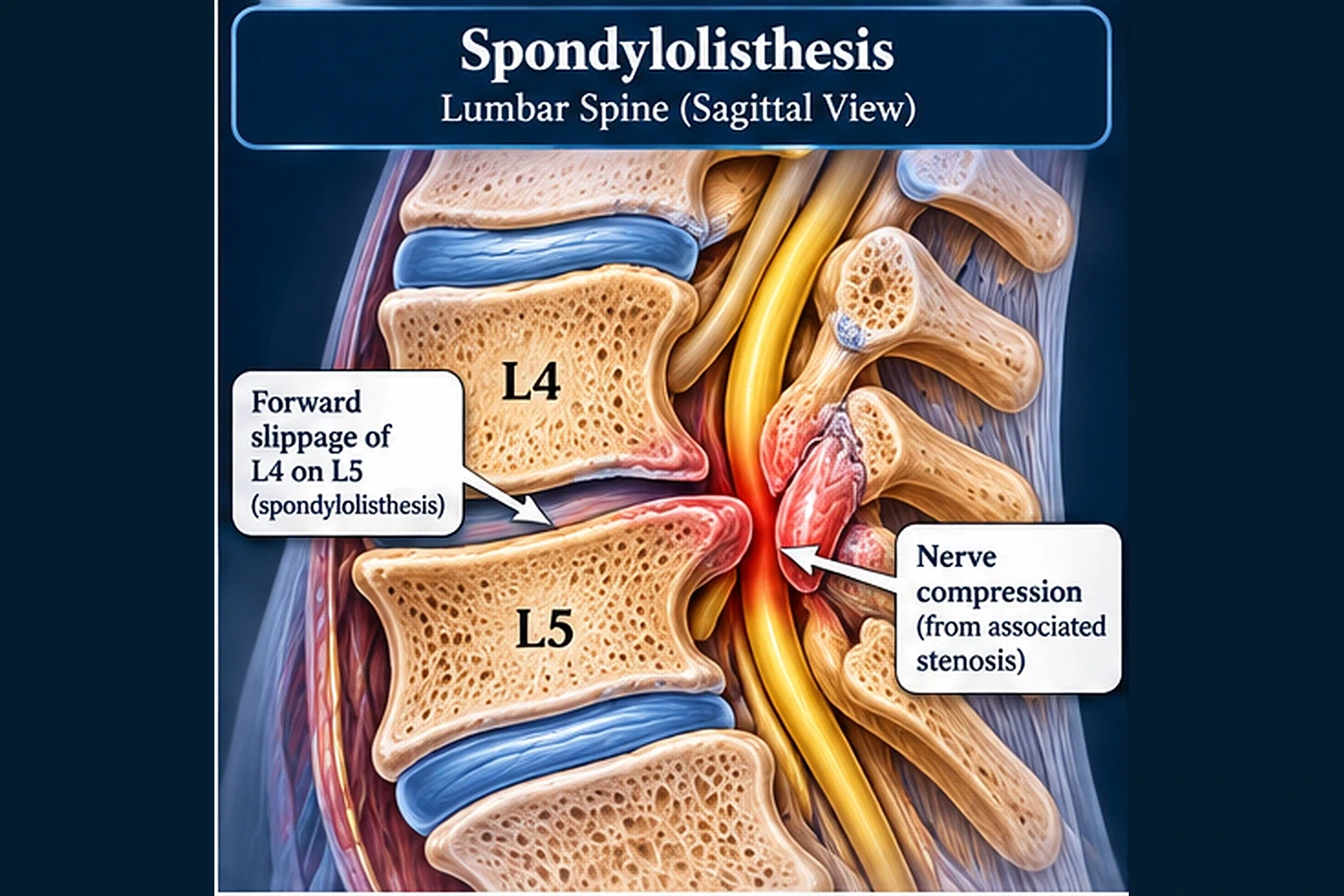
Overview
Spondylolisthesis means that one vertebra has slipped relative to the vertebra below it. A slip can be found incidentally or can accompany back pain and nerve compression. The amount of displacement alone does not determine treatment. Symptoms, neurological findings, stability, and overall spinal alignment all contribute to the decision.
Common Symptoms
Possible symptoms include low-back pain, leg pain, tingling, numbness, or weakness. With accompanying stenosis, standing and walking may become uncomfortable while sitting offers relief. Some people have no symptoms. A clinical evaluation helps distinguish pain associated with the slip from other causes of back or leg symptoms.
Causes and Risk Factors
Degenerative spondylolisthesis develops with changes in discs, joints, and supporting tissues. Isthmic spondylolisthesis is associated with a defect or stress fracture in a small bony bridge called the pars interarticularis, often originating earlier in life. These are different mechanisms and do not automatically call for the same operation.
Evaluation and Diagnosis
Standing X-rays show vertebral relationships. Selected bending views may help evaluate abnormal movement when instability is a concern. MRI assesses nerve compression, while CT can clarify bony anatomy, including a pars defect. Examination of strength, sensation, reflexes, and walking helps determine whether the imaging explains the symptoms.
Nonsurgical Treatment Options
For many patients, treatment starts with activity changes, physical therapy or an exercise program, and individualized medication. Injections may be considered for certain nerve-related symptoms. Nonsurgical care does not necessarily move a slipped vertebra back into position; its purpose is to improve symptoms and function. Follow-up depends on symptoms and clinical findings.
When Surgery May Be Considered
Persistent disabling symptoms or worsening neurological impairment may justify surgical consideration. Decompression relieves pressure on nerves; fusion addresses stability when needed. Some patients with stable degenerative slips may be considered for decompression without fusion. Isthmic disease, instability, and alignment may change the discussion. Not every slip requires fusion or any surgery.
When to Seek Neurosurgical Evaluation
Evaluation may be useful when leg symptoms, weakness, or declining walking tolerance interfere with daily life, or when appropriate nonsurgical care has not helped. A consultation should clarify the type of slip, whether it is unstable, and which symptoms a proposed treatment is intended to address.
Important Warning Signs
New difficulty urinating, loss of bladder or bowel control, or numbness around the groin with back or leg symptoms requires emergency assessment. Rapidly progressive weakness also warrants urgent care. Increasing falls, weakness, or numbness should be reported promptly rather than waiting for a distant follow-up visit.
Questions to Ask Your Neurosurgical Clinician
Is my slip degenerative or isthmic? Is there evidence of instability or nerve compression? Could decompression alone be appropriate, or why would fusion be considered? What are the alternatives, expected functional goals, and limitations of the recommended plan?
References and Further Reading
The following professional-society patient-education resources informed this draft. They are not formal clinical practice guidelines and do not endorse this website.
Preparing for Your Consultation
Bring your imaging, reports, medication list, and relevant treatment history. Describe symptoms and the activities that matter most to you. Clinical assessment combines examination and imaging with individualized discussion of options.
Medical Information Disclaimer
This article is an editorial draft requiring physician review. It provides general education, not individualized medical advice or a guarantee of treatment results. Seek qualified medical assessment for your own circumstances and emergency care for urgent symptoms. This independently maintained physician-information website is not an official website of CU Medicine, the University of Colorado, or UCHealth. References do not imply society or institutional endorsement.