Lumbar Disc Herniation
Disc material in the lower spine that can irritate or compress a nearby nerve.
General educational information is not a diagnosis or treatment recommendation for an individual.
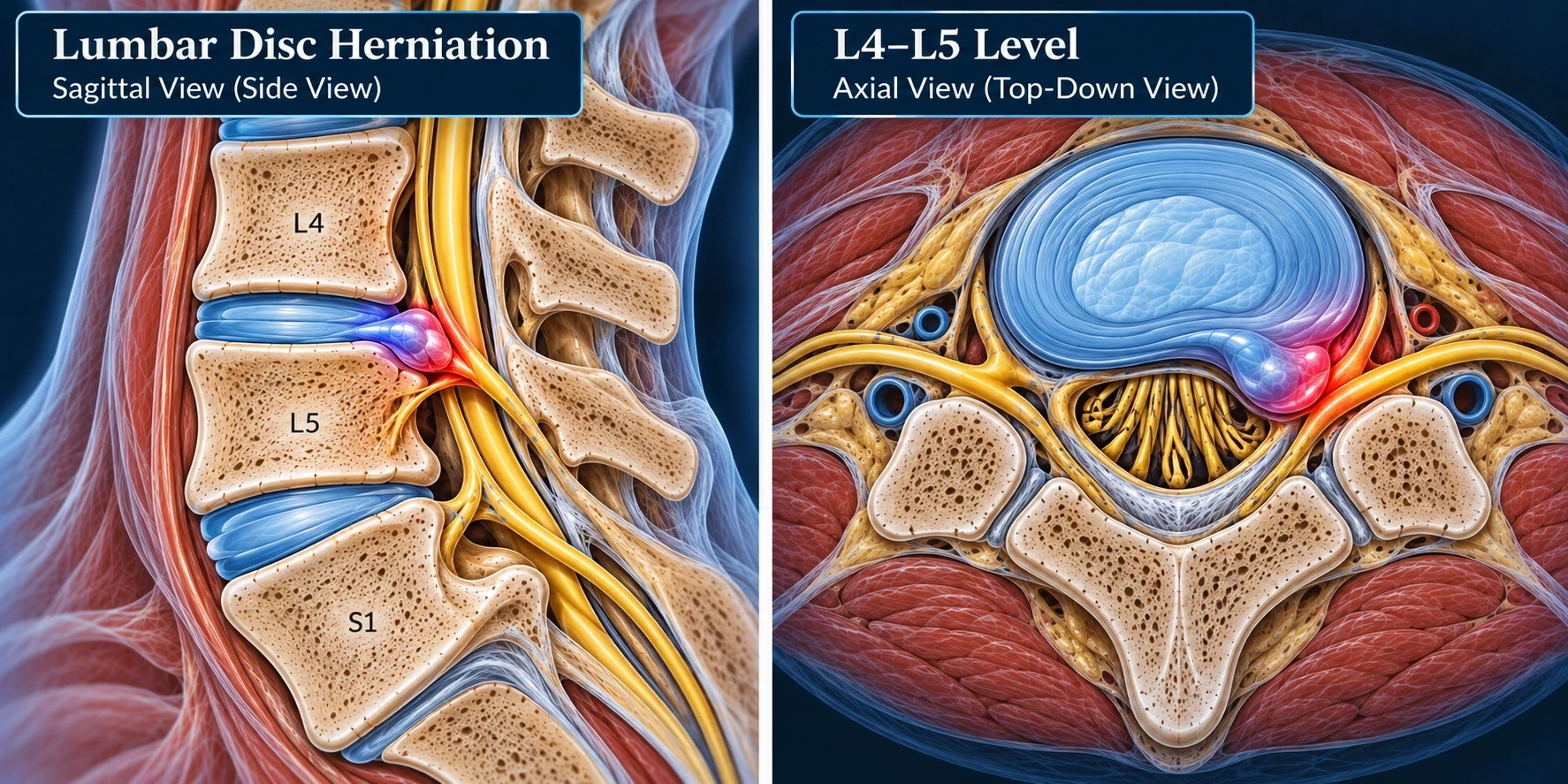
Overview
A lumbar disc herniation occurs when material from the inner portion of a lower-back disc extends through or beyond its outer covering. If it irritates or compresses a nearby nerve, it may cause symptoms in the leg.
Disc changes may also be found in people without symptoms. The location and appearance of a herniation must be interpreted alongside symptoms and examination findings. Many people improve without surgery, but neurological warning signs require prompt attention.
Symptoms
Symptoms may include pain traveling from the buttock into the leg, often called sciatica, along with tingling, numbness, or weakness in the leg or foot. Back pain may accompany these symptoms.
Not all leg pain is caused by a disc herniation. The pattern of symptoms and clinical examination help distinguish it from other problems.
Causes and Risk Factors
Discs change with age and can become more vulnerable to tearing or bulging. A herniation may follow lifting, twisting, or injury, but a clear triggering event is not always present. Repeated physical strain and smoking are among factors associated with disc problems.
Evaluation and Diagnosis
Evaluation includes symptom history and an examination of strength, sensation, reflexes, and sometimes maneuvers that assess nerve irritation. MRI may be appropriate to assess disc material and affected nerves. Other testing depends on the clinical question.
Testing is individualized. A clinician considers whether the imaging abnormality matches the side and pattern of symptoms rather than treating the scan in isolation.
Treatment Approaches
For patients without concerning neurological findings, options may include clinician-guided activity modification, physical therapy, and medicines appropriate to the individual’s health. An injection may be considered for selected patients to help manage nerve-related pain.
If surgery is appropriate, a discectomy or microdiscectomy removes disc material compressing a nerve. Surgery has risks, including infection, nerve injury, spinal-fluid leak, recurrent herniation, and persistent symptoms. No approach guarantees recovery.
When Surgical Evaluation May Be Appropriate
A specialist opinion may be useful for persistent, function-limiting leg pain despite appropriate nonsurgical care or for weakness. Significant or progressive weakness may justify earlier evaluation rather than a fixed waiting period.
Emergency nerve compression is a separate situation and should not wait for a routine appointment. Otherwise, timing is individualized based on symptoms, examination, imaging, goals, and the balance of benefits and risks.
Urgent Warning Signs
Seek emergency assessment for new inability to urinate, new loss of bladder or bowel control, numbness in the groin or saddle area, or rapidly worsening leg weakness. These can indicate serious nerve compression, including cauda equina syndrome. Do not wait for a routine appointment. Call 911 if emergency transport is needed.
New or progressive weakness deserves prompt clinical assessment. These examples are not exhaustive.
Questions to Discuss With Your Clinician
Which findings explain my symptoms, and are other causes possible?
What nonsurgical and surgical options are reasonable for me? What are their risks and limitations?
What changes should prompt urgent reassessment, and what follow-up is appropriate?
If surgery is discussed, what is its goal, what may not improve, and what happens if I defer it?
Frequently Asked Questions
Does every herniated disc require surgery?
No. Many people improve with nonsurgical care. Neurological deficits and persistent disabling symptoms can change the discussion.
Is all back pain caused by the disc shown on my scan?
No. The clinician compares the scan with symptoms and examination and considers other explanations.
How long should I try nonsurgical care?
There is no single interval for everyone. Ask about a plan appropriate to your symptoms and which changes should prompt earlier reassessment.
References and Further Reading
Discuss Your Questions With Our Team
A consultation can help you understand findings and appropriate options. Medical emergencies need emergency assessment, not a routine appointment.